“Teaching art or teaching to think like an artist?” – Cindy Foley at TEDxColumbus


Cindy Foley is the Executive Deputy Director for Learning and Experience at Columbus Museum of Art. The Museum houses works by renowned artists like Renoir, Cézanne, Singer Sargent, Gentileschi, Ingres, Corot, Cassatt & Picasso.
Foley did a 14min TEDx talk on the problems of how art is being taught, using her own daughter, Adeline, as an example.
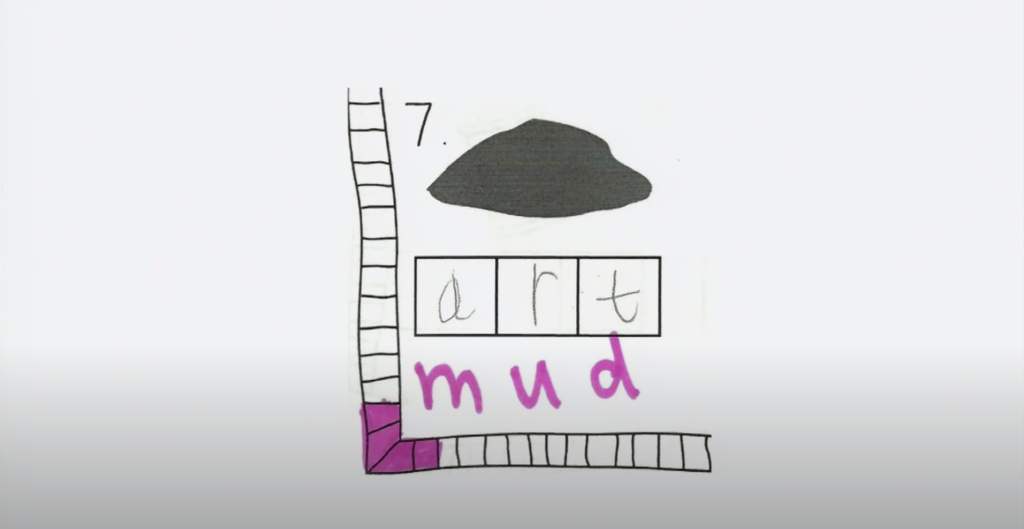
The images above show one of Adeline’s elementary school assessments. When asked to fill out a 3-letter word for a “nebulous” mass (Foley’s phrase), Adeline wrote ‘Art’. The ‘correct’ answer was ‘Mud’.
This made Foley question how art is being taught, and the problems with art education; we’ve been focusing so much on teaching art as a concrete thing and assessing things like “elements of art, art history and foundational skills.” The best thing art can add to society, is teaching the capacity to think creatively (with benefits to business and other sectors).
However, according to Foley, the Torrance creativity test in America has shown that creativity has been on the decline among 6 – 11 year olds since the 1990’s. There’s something wrong with art education!
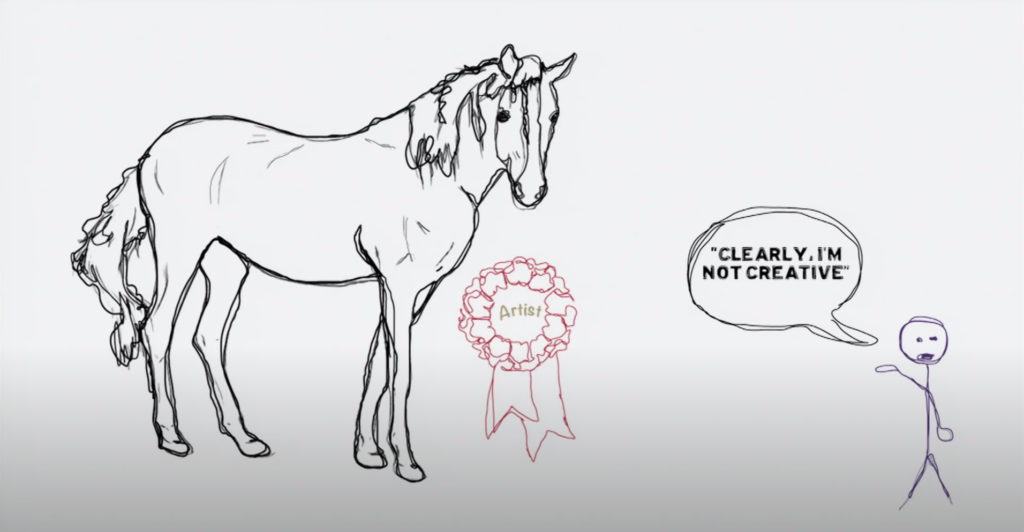
Foley illustrates how we would typically praise realistic, naturalistic drawings as being ‘creative, talented’, and anything less than that is seen as ‘not creative’. Ever heard someone say, “I don’t have a creative bone in my body, I can’t even draw a stick figure”? This is a blocker to art education and not conducive to teaching creativity.
So, how do you teach creativity? Foley believes in order to do this you need to teach students how to embody the habits that artists employ: comfort with ambiguity, idea generation and trans-disciplinary research.
Foley found that creating content (lesson plans) around Claude Monet’s work and how to paint like him, did not teach the students how to become artists like Monet. What made Monet the artist he was, is the way he thought and saw the world.
The problem is that the “Master Builders” (using an analogy from the Lego Movie) in art education are not the students, but the teachers! The teachers have the ideas and come up with the lesson plans. Artists need to play in order for idea generation to take place. So, when students don’t get the opportunity for ambiguous play, they will not be able to learn how to be creative. No wonder creativity in America (and arguably in South Africa) is on the decline.
Disciplines like art, maths, science, should be in service of ideas – not discreet and separated from each other. Trans-disciplinary research is essential to creativity. We need to find new ways to measure creativity and teach students to be comfortable with ambiguity, allow space for trans-disciplinary research, and let the ideas flow from the students – not the teachers.
I found this video so insightful, firstly because it resonates with me, as I’ve struggled internally with a vague feeling that something is really wrong with art today, ever since I completed my BA in Fine Art. I have not been able to figure out why, for the past four years, I have not made any art.
Secondly, I found this video really insightful, because I want to start teaching art but have no idea where to begin. What can I offer? What can I teach? Why would students want to learn from me? How can I prepare?
Foley’s talk challenges some of my own assumptions head on. Even though I feel I have not ‘been an artist’ for the last 4 years, I have in fact always been an artist, because of the way I think. I cannot un-be an artist 😂 I have only had a change in materials from paint, pencils, wood and electronics to business, digital images, tech and content for marketing.
I’ve now realised that, essentially, my creativity has been enriched ever since leaving art school and being exposed to other disciplines, people who are not artists by profession and a range of other skills I had never developed before.
How can I teach art? I can teach how to think like an artist.
Watch the video below: